Week 5: Whither development?: The crossroads at the end of history
DVST 6901: The global politics of development (Semester 2,
2026)
August 31, 2026
At the end of the 20th century, the ironies and contradictions baked into the classical Cold War idea of development could no longer be avoided. Do we reject development itself or redefine it?
Main reading: Escobar ([1995] 2012), intro. and chap. 3; Sen (1999), intro. and chap. 4
Other reading: Rist (2014), chap. 11
What makes life worth living: Revisiting the question
When we started, I asked everyone to reflect on two related questions:
- What defines a good life?
- What are the conditions that people deserve to have?
Over the last few weeks, we have explored people’s answers to these question. I have noticed several elements running through the answers
- Material sufficiency
- Freedom to pursue valued goals, freedom from interference
- Meaning and purpose
- Collective self-detemination
- Respect, recognition as an equal
The last item is interesting because it points to a tension in the many different positions people take on these questions.
Which is more important?
- Freedom
- Equality
Whether for individuals or groups, these two things can be in contradiction.
Is there a Zen road to affluence?
Hadza are a society in Tanzania who obtain most of the resources for their material needs directly from the local environment by foraging (hunting and gathering).
Food is a daily quest, but not a struggle. Hadza do not spend a lot of time collecting food.
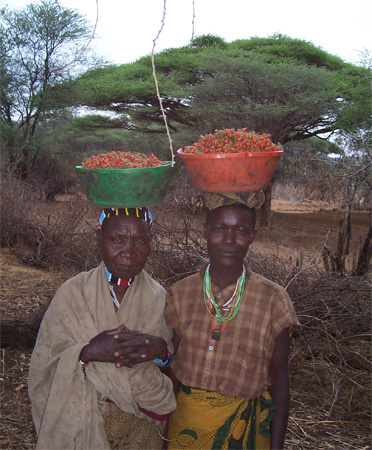
The rest of the day is spent on a wide variety of other activities, including song and dance (“Hadza” n.d.)
Few Hadza children attend school. Schooling is available for children, but there is little uptake. Schools created for Hadza now mainly serve children from neighboring societies.
Hadza people are risk of several diseases that are common in this area, like malaria. A hospital is at least one day’s walk and mobile clinics make occasional visits.
Are Hadza living in poverty?
Counted out?
“It would be nice if all of the data which sociologists require could be enumerated because then we could run them through IBM machines and draw charts as the economists do. However, not everything that can be counted counts, and not everything that counts can be counted.” (Cameron 1963, 13)
What are examples of this?
- What are examples from your own knowledge and experience of counting things that do not count?
- What are examples from your own knowledge and experience of ignoring
things that do count?
- Would it make a difference if we counted (quantified) the things that were ignored, but in your view should count (be valued)?
Use a two-column Google Doc to share ideas: https://docs.google.com/document/d/1uUKTQnxRqbrja4ujh4C08ld-ipDQ3d9it1h005sI2eQ/edit?usp=sharing
Make the two lists as long as possible.
Discuss with your neighbors what metrics (measures, indicators) you would want for items in column 2.
Discuss with your neighbors the arguments for and against quantifying any item in column 2.
Governmentality: the population as a thing to be improved
Foucault builds on Weber (Foucault 1991)
A shift from sovereign power — the right to take life, to compel obedience — to governmental power: the state tends a population as if it were a living body with measurable, improvable indicators. Health. Productivity. Fertility. Literacy.
The population becomes an object of knowledge: census, statistics, survey.
Once a population is something to be optimized, intervening in daily life stops looking like domination and starts looking like care.
The politics of development has always taken place in and through the science of the state
As Weber argues, state power is expressed through bureaucratic rationality in which decisions rely on a means–ends calculation.
In the era of development, states split on whether development should aim for economic growth and transformation of social and economic institutions or redistribution. As we have discussed this was a deeper split between the priority of self-determination over integration within a liberal order.
Yet consider also that both sides of that argument agreed that poverty was the problem to be addressed, and this considered the problem of poverty at the population level, as a mass phenomenon.
- The deeper conflict was also over the primacy of political rights over economic and social rights, or negative and positive liberty.
- Yet the measures of success on advancing either were mostly the same.
- And, the socialist and Third Worldist bloc, right or wrong, for better or worse had less and less influence over time.
The West “won” but development as growth through transformation did not really win
The development era also coincides with a distinct phase in global capitalism, a boom period in which mass production generates mass affluence in wealthy societies and entrenches an unequal “world-system” in which core (rich) societies where advanced capital lives extract raw materials from poor, peripheral societies through unequal exchanges.
Poverty decrease faster than ever, but still represents a modest overall net change
- Birth rates rise, child mortality falls; the absolute number of poor people rises globally, especially in the world’s poorest regions.
- Inequality increases as developing societies grow their economies
- Urbanization and the expansion of urban poor
- Missing women, and other gendered effects of development
And, after all, what are societies of the developing world catching up to? Many affluent societies have highly concentrated and systemic forms of poverty in which people’s lives are arguably no better than in the world’s poorest countries.
At the end of the Cold War, development economics is king, but also has no clothes.
Appendix
Keywords
capabilities approach, postdevelopment
Learning outcomes
- Understand the critical rethinking of development theory in the late 20th century
- Be able to compare and evaluate new definitions of development as freedom and the idea of postdevelopment