Week 11: Stop development, I want to get off: Has growth gone too far?

DVST 6901: The global politics of development (Semester 2, 2026)
October 19, 2026

An independent nation in a postcolonial world can be anything it wants to be. So why on earth would you want to be like this? If the goal is wellbeing, how do we avoid the social diseases in the so-called developed world?

Main reading: Rivero (2019), intro. and chap. 6

Padlet time: Progress on projects

Go to: https://padlet.com/sydney/progress-reports-on-your-projects-s024n2lgwhxgdkpb2emg

Opposing megaprojects

More money, more pollution?
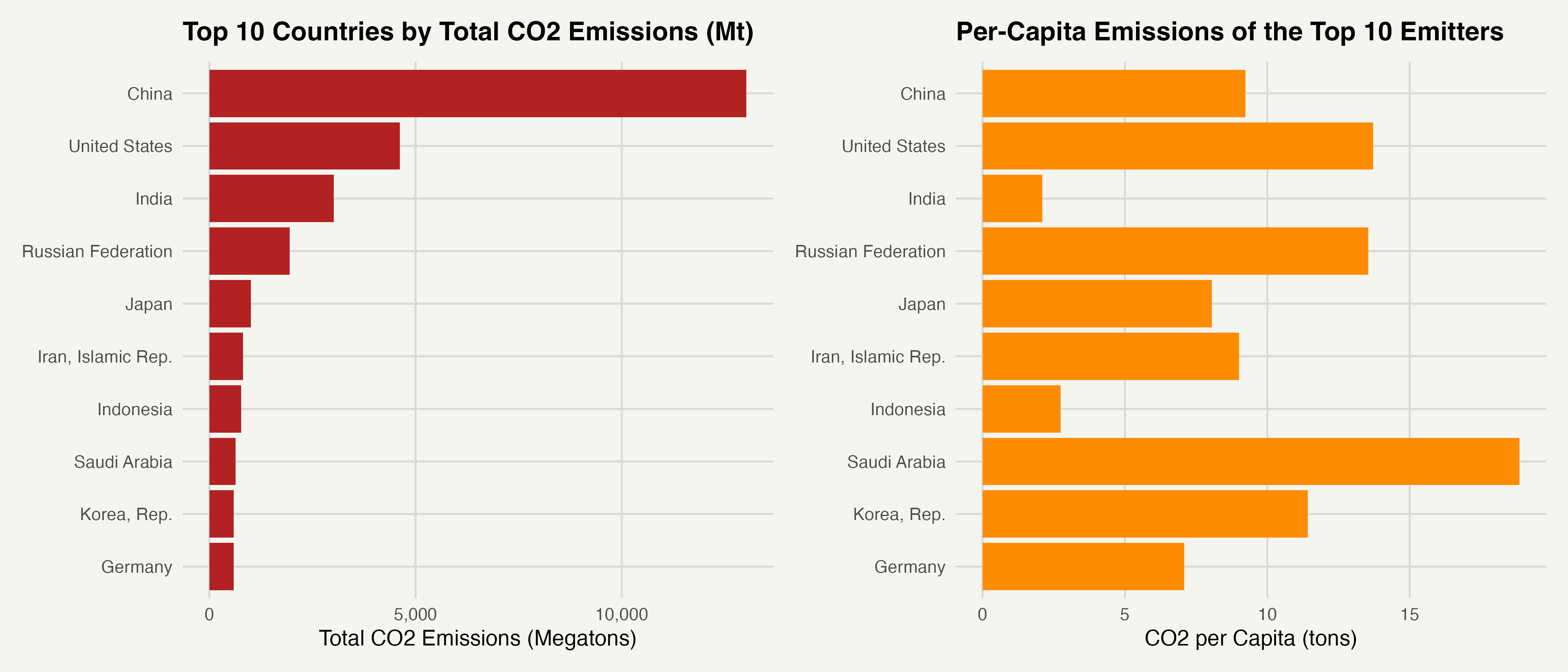
Figure 1. Just a few countries are responsible for emitting most of the carbon, and China is the worst emitter. But is that all there is to it? Correction 21 Oct: A previous version of this chart displayed the wrong data in the right panel, showing carbon intensity (emissions–GDP ratio) instead of per capita carbon footprint. The US has much higher per capita CO2 emissions than the other top 10 emitters.

The size of the pie does not mean that the pollution bill is higher

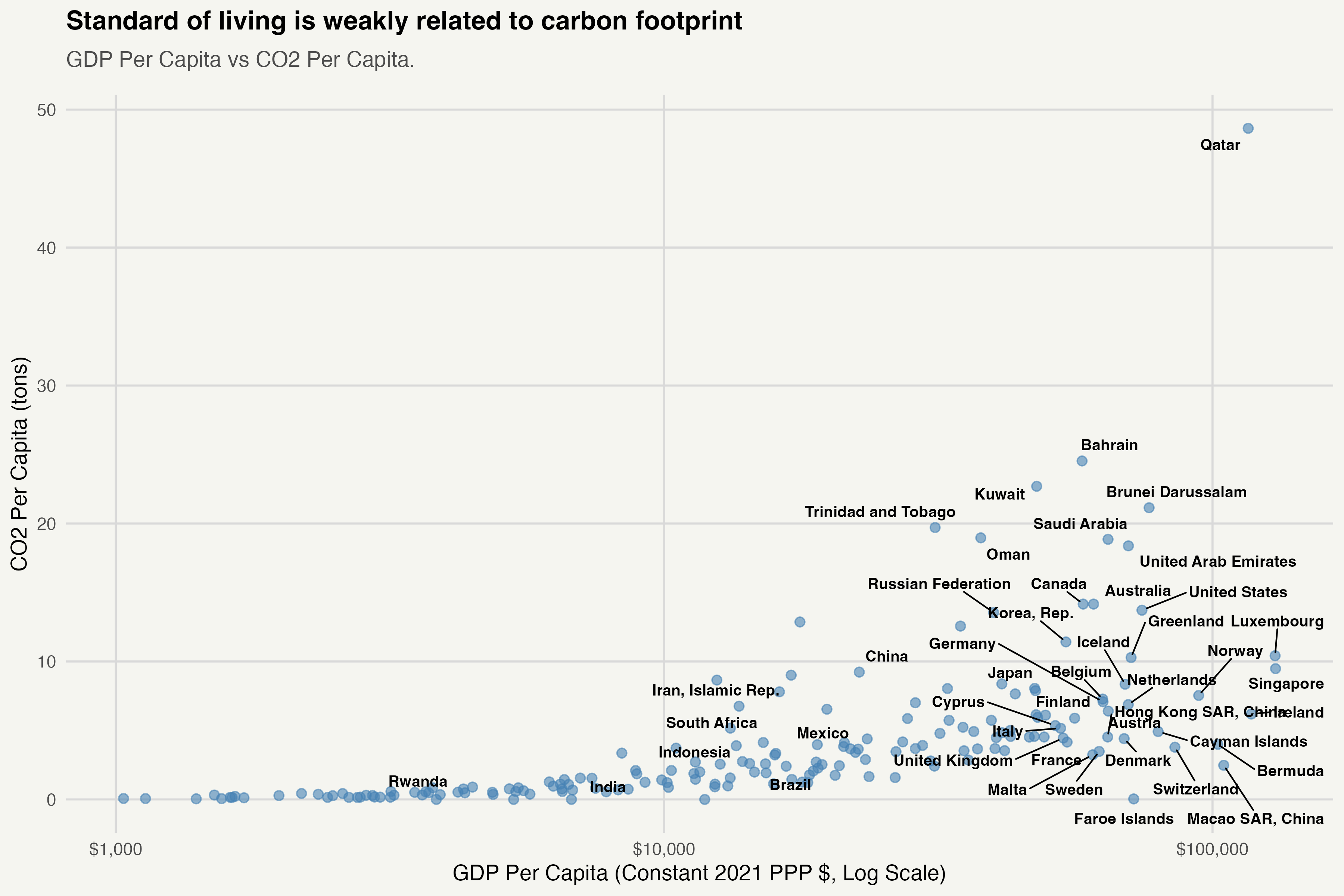
Figure 2. Wealthier societies with higher average incomes have larger carbon footprints per person but there is a lot of room for variation and the two are not tightly linked. Correction 21 Oct: This slide previously displayed a different, mislabeled graph showing the relationship between carbon emissions per dollar of GDP, rather than living standard (GDP per capita) versus carbon footprint as its labels said. This chart shows the relationship between living standard and carbon footprint accurately.

The size of the pie does not mean that the pollution bill is higher

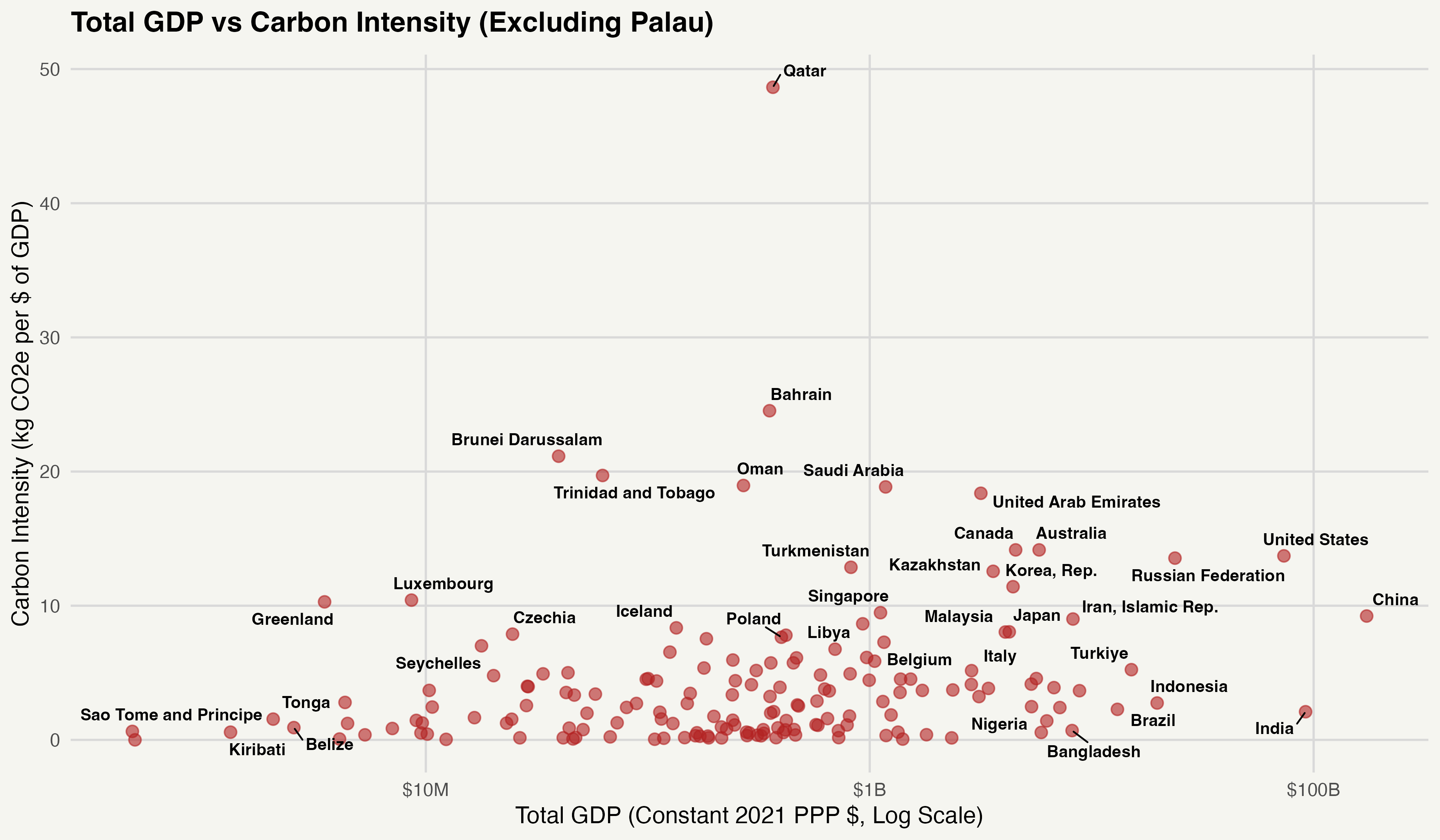
Figure 3. There is no linear relationship between emissions relative to size of the economy and the size of the economy. Large economies can be more or less carbon efficient overall.

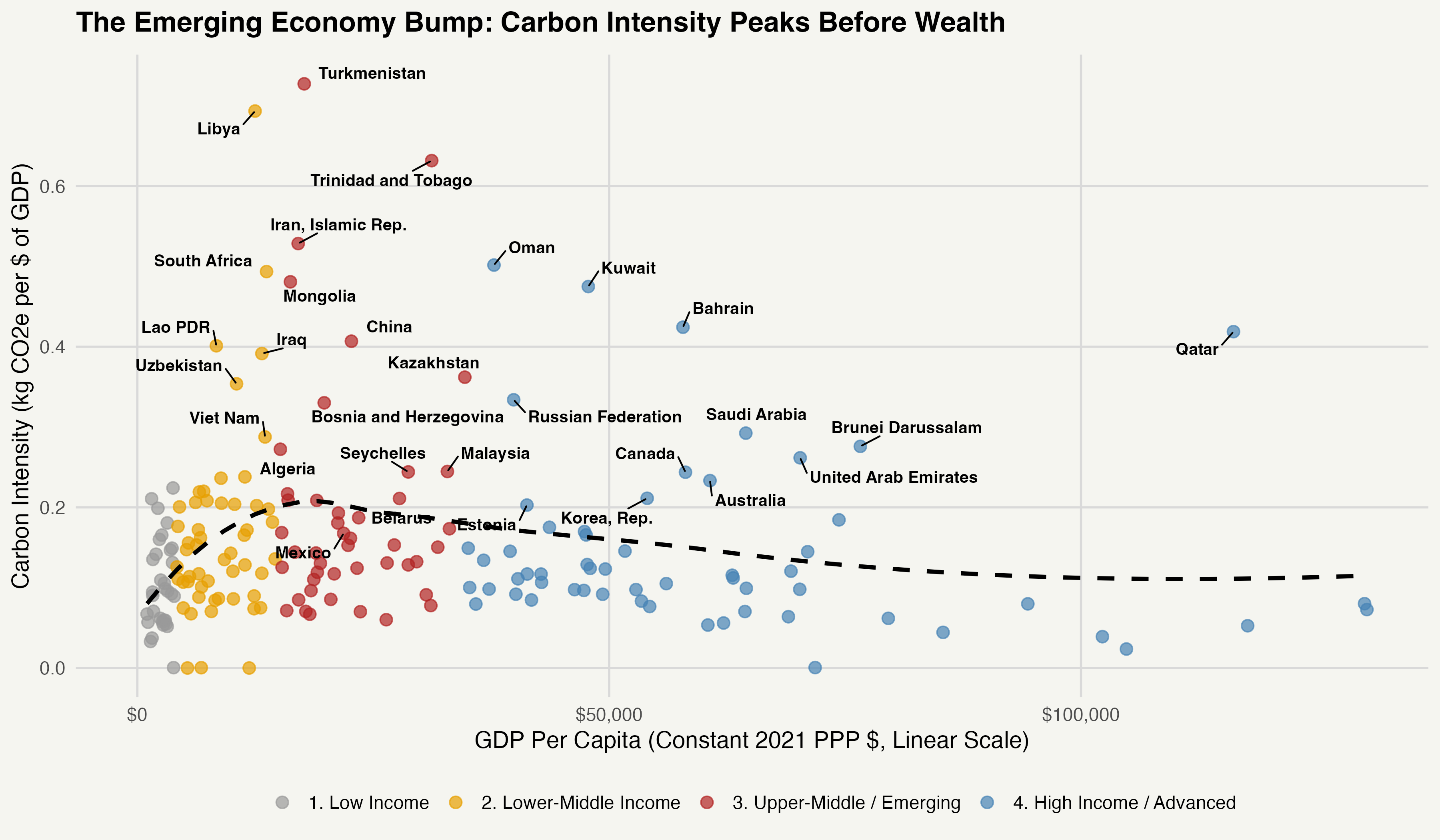
Is having a dirty economy like pimples for teenagers? Is it just a (developmental) phase?

Figure 4. Like the previously observed relationship between GDP and inequality, it appears that you can grow out of dependence of carbon emissions. Get big and rich enough and you also get efficient. OK, so what happens next for the emerging countries?

Tuvalu and Australia

And here is a link to a map of Tuvalu: https://maps.app.goo.gl/1isyxJY7oipkF3dG9

What will development for Oceania be in the future

Question: Do these two cases have anything in common on a more general level about what they indicate about what development means now?

After a certain point, you can’t make the pie higher

Notes for class

Keywords

degrowth

Learning outcomes

References

Rivero, Oswaldo de. 2019. The Myth of Development: Non-Viable Economies and the Crisis of Civilization. London: Bloomsbury Academic & Professional. http://ebookcentral.proquest.com/lib/usyd/detail.action?docID=5915282.